My Future Leadership Brand

In my last blog, I would like to discuss what type of leader am I willing to become, and what are the different aspects that leaders need to emphasise on and all the different criteria that an effective leader need to possess. 
I have been working in Dubai since the last five years and my job was a team leader in the military industry where I was happy with my teamwork and the performance of my team. However, after coming to London for my higher education, I found that the leadership styles that were preferred in Dubai is very different from what has been perceived in the UK. The first lesson that I have learned is the culture. Every nation has their own culture and according to that culture, leaders need to employ appropriate style of leadership.

Why learning this subject, one theory that I have learned and I would want to take into account is the behavioural theory. This theory has been associated to the trait theory where they are providing a new viewpoint where they are putting concentration on the leaders’ behaviour in contradiction to the social, physical, or mental attributes. Therefore, with the progression in psychometrics, noticeably the analytics factor has an important measure of the cause-and-effect association of particular human behaviour. This theory is segmenting the leader into classification: those that are emphasising with task and the others are focusing on the people.

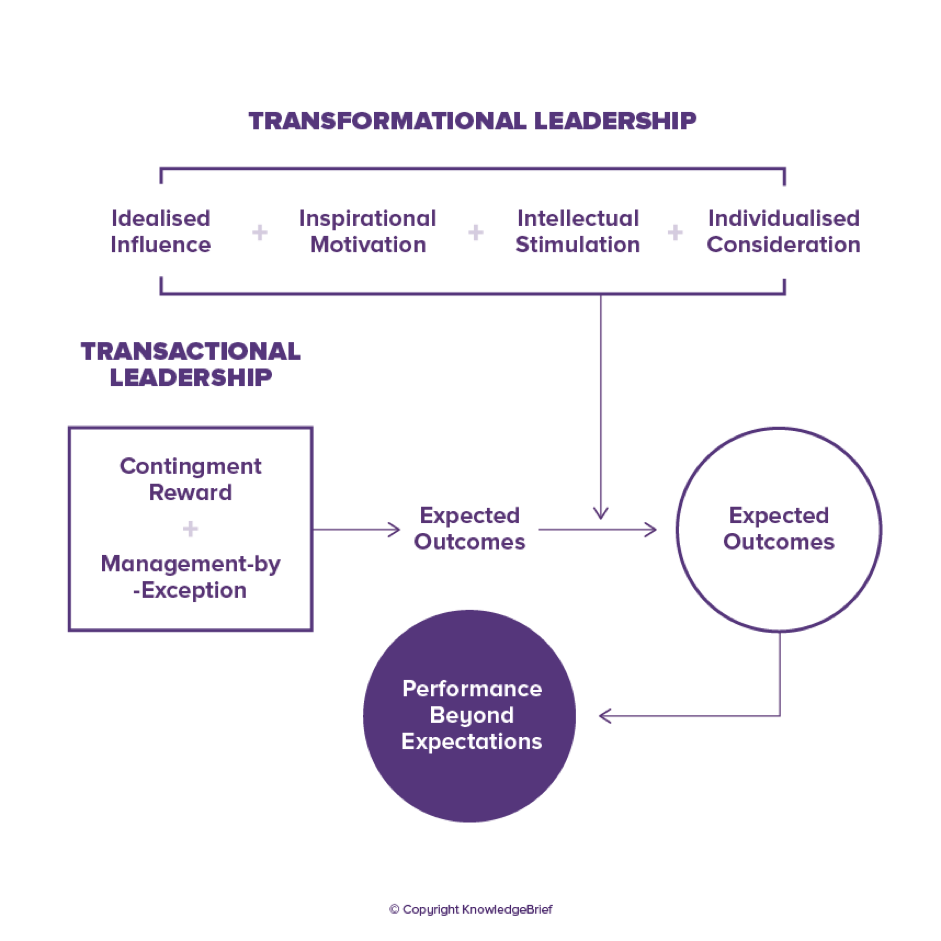
Apart from this theory, I also learned two styles of leadership which are transformational and transactional which are described in the blog 2. I believe for the current modern environment, the combination of transformational and transactional leadership will help me to become an effective leader. Moreover, after researching various styles of leadership, I also came across a leadership call situational leadership which allows the leader to behave on the basis of different situation. It is evident that every scenario is unique on its own and therefore leaders need to employ different traits of leadership to conduct specific activities.

Furthermore, to understand whether I can become a good leader or not, I have received feedback from my classmates as we had to work on various team working activities. My classmates mentioned that I have a commanding and controlling attitude which may not be relevant in the current modern age. I believe, as I belong from my nation where commanding and control is a norm I have received the traits from my country. However, in order to work ahead and be a part of the multinational culture, I would like to change my type of leadership so that I can work on various situation.

Moreover, to act on my leadership traits, I decided that I would want to make a development plan which will help to keep a track of the various skills that are required to build. Hence, I have decided to make use of the Project Planning which will plan the various activities with deadlines. I believe by doing this I would be more disciplined and will be able to achieve my goals. 

References

Mullins, L. and Christy, G. (2016). Management and organisational behaviour. Harlow, England: Pearson.

Change Management

According to Nimmo (2018), businesses are uncertain on how they will be performing their activities after the Brexit has been accomplished. Brexit refers to the fact that Britain have voted to leave the European Union as they want to have overall control of the operations. Due to this, there are various impacts on the businesses for example, the import prices have become higher, the value of the pound has dropped, and have no longer have access to the single market. 

According to Morris (2018), it was perceived that the exported goods from UK have amounted to £133bn.Nonetheless, it is anticipated when the accomplishment of Brexit will occur, they would be confronting a minimum loss of £4.5 billion per year until a new agreement of trade has been established with the European Union. One of the important impact that people in the UK are worried and concerned are they would be losing their jobs one is the Brexit have occurred. This is because European people would require a visa to work in the UK and it has been anticipated that the rate of unemployment would be rising by 6.5% which refers to the fact that more than 500,000 people would be unemployed. To understand the impact of Brexit on a particular industry, the author of taking into consideration of a telecommunications provider.

Vodafone is a well-known telecommunication provider in the UK and they have more than 20 million consumers and have provided employment to 30,000 people. After the Brexit had occurred, the CEO have mention that they would be relocating their headquarters to another region apart from UK (Davies, 2018)

According to Sheffield (2017), Vodafone had made an announcement that they would be shifting their headquarters and this is due to the fact that they believed that they would be confronting limitation from the capital, goods, and people. Moreover, as the pound have fallen, the economy would be slowing down which means the customer confidence would be getting lower. This will have a huge impact on the sales performance of Vodafone.

To implement new changes in the organisation, the author has employed the three step change model (Hussain, 2018). If Vodafone are taking into consideration of this model, this will provide assistance to the employees to be prepared beforehand so that they can shift a different location. Vodafone needs to be stable on your own so that the employees feel that the organisation will help them. Currently, the situation can be categorised as unfreezing stage as there are still thinking whether it would be beneficial to leave the UK or not. At this stage, they are looking at various options and preparing documentation which will help them to implement changes in the future. After they have understood and taking the preparation they would be moving to the change segment where they will be mentally prepared to counteract reality and shifting their headquarters to a different region apart from UK. Practically, it is very difficult as Vodafone has been operating in the UK since years. After Vodafone has made their mind and they have already relocated some of their operations outside UK they will be then transferred to the refreeze stage where they would be monitoring the changes whether the company is being able to combat the current situation or not.

Change management is a very difficult process and in reality it needs high cost, capital and labour to bring the theory into reality. However, to avoid losses and be ahead of the competition, companies like Vodafone are taking preparations from beforehand so that they can still maintain their position in the telecommunication industry (APM, 2018)

References

APM (2018). What is change management? | APM. [online] Apm.org.uk. Available at: https://www.apm.org.uk/body-of-knowledge/delivery/scope-management/change-management/ [Accessed 8 Jan. 2019].

Davies, R. (2018). Vodafone among firms that may move HQs from post-Brexit UK. [online] the Guardian. Available at: https://www.theguardian.com/business/2016/jun/28/firms-plan-investment-freeze-amid-brexit-fallout-cbi [Accessed 8 Jan. 2019].

Hussain, S. (2018). Kurt Lewin’s change model: A critical review of the role of leadership and employee involvement in organizational change. Journal of Innovation & Knowledge, 3(3), pp.123-127.

Morris (2018). BT, Vodafone Still Fretting Over Brexit Costs, Uncertainty | Light Reading. [online] Light Reading. Available at: https://www.lightreading.com/regulation/bt-vodafone-still-fretting-over-brexit-costs-uncertainty/d/d-id/744314 [Accessed 8 Jan. 2019].

Nimmo (2018). Vodafone chief executive Vittorio Colao warns on Brexit as he quits. [online] This is Money. Available at: https://www.thisismoney.co.uk/money/news/article-5748655/Vodafone-chief-executive-Vittorio-Colao-warns-Brexit-quits-decade-helm.html [Accessed 8 Jan. 2019].

Contemporary Leadership Styles in the 21st century

According to Yukl (2015), leadership can be characterised as an activity where the organisations leaders are leading a group of people and they have the power in motivating them to work together for a common purpose.

The conventional style of leadership can be characterised as a product of bureaucratic and top-down prototype. This theory was seen to be a efficient for manufacturing sectors, however in the current age they are not appropriate for economy as current economy is based on knowledge (Uhl-Bien, 2012). 

According to Business Directory (2015), hierarchical organisation is described as a structure that comprises of different levels within the business which can also be stated as chain of various command with huge number of workers who are managed by a level smaller than them.

Great Man Theory 

There is a debate about leaders that whether great leaders are born or they are made. This theory has summarised the statement which infers the fact that leaders are born with innate traits. Nonetheless, this theory have received criticism from various scholars and these two leadership has been gaining significance. These are transactional and transformational leadership which can also be perceived as redefined leadership.

According to Manktelow (2015), transformational leadership can be described as leaders and the followers that are working with each other and have great levels of motivation and morality. There are several steps that need to be followed to be developed as a transformational leader and they are stated below:

●     Inspiring people so that they buy in and delivering the vision- To inspire the people, it is important to acknowledge the values and norms and then inspire them by informing them about the expertise and how they will be led. It is important to share experiences by conducting a storytelling of the leader’s achievement which will help in aligning with the tasks and goals

●     Designing a motivating vision for the forthcoming period- If leaders have a vision it will assist the team to know the purpose of conducting the activities and they would be able to give their efforts in developing for the organisation

●     Supervising the delivery of vision- In order to deliver the vision of the leader and their team, it is important to have a combination of change and project management together this will help in delivering the transformation by having the support of the followers. Moreover, the team members would also know about their accountabilities

●     Developing powerful relationships based on trust- Concentrating on the people and assisting them to work harder so that they can accomplish the goals. The Leadership Process Model of Dunham can be employed which will help in outlining how vital the people are to achieve success as a leader. Moreover, the leader needs to develop trust within the people by having an open and transparent communication

Transactional Leadership- this type of leadership is focused in sustaining the normal operational flow and they make use of incentive and disciplinary power to make their employees inspired to conduct the best performance. In short, they are often giving rewards for their excellent performance. According to Mullins and Christy (2016), transactional leadership establish their goal and offers direction to the employees. They serve constructive feedback on the performance and emphasis on increasing effectiveness. Similarly, they set and establish standardised practices for the organisation to be productive and effective. Additionally, there are also responding to conventionalities and recognise the corrective measures in improving the performance of the employees.

Challenges faced by leaders 

In the current modern environment leaders are facing various challenges and there are stated below (CCL, 2016)

●     Devising Effectiveness for the Management Team- This infers that leaders are confronting challenges in building appropriate skills for example decision-making, time management, and strategic thinking

●     Motivating Others- It is a challenge for the leaders in motivating others to make sure that they are happy with their jobs and are working effectively

●     Building employees- It is a huge challenge of building people which comprises of coaching and monitoring

●     Leading Teams- it is a challenge of building team, as well as managing the team. Some of the particular challenges that are faced by leaders are how to integrate pride, how to offer assistance, how to lead a huge team.

●     Guiding the transformation- This refers to the fact of understanding, managing, and leading the change

●     Management of internal stakeholders- It is very important to supervise the relationship, image, and politics and this challenge requires achieving support from the management team, and getting knowledge from other individuals and groups.

Example of a Motivational Leader

When Air Asia was an unsuccessful business, Tony Fernandez had taken over the organisation, and currently they have more than 85 aircraft providing transportation to more than 30 million people all over the globe (Mullins and Christy, 2016). 

Future Leadership

Currently, majority of the theories of leadership can be described as masculine. This refers to the fact that they are not providing any emotional connection with the employees and tends to have less communication with them. In the current future, the feminine leadership will be prevailing as they offer a good balance between the work and life. They show more emotional attachment to the employees and has a more collaborative nature which is required in the modern day environment.

References

CCL (2018). The Top 6 Leadership Challenges Around the World. [online] Center for Creative Leadership. Available at: https://www.ccl.org/articles/leading-effectively-articles/top-6-leadership-challenges/ [Accessed 8 Jan. 2019].

Business Dictionary (2018) in Business Dictionary[online] available from <http://www.businessdictionary.com/definition/leadership.html>%5BAccessed 8 Jan. 2019].

Mullins, L. and Christy, G. (2016). Management and organisational behaviour. Harlow, England: Pearson.

Manktelow, J. (2015) available from <https://www.ccl.org/articles/leading-effectively-articles/top-6- />[Accessed 8 Jan. 2019].

Managing Culture in the Organisations

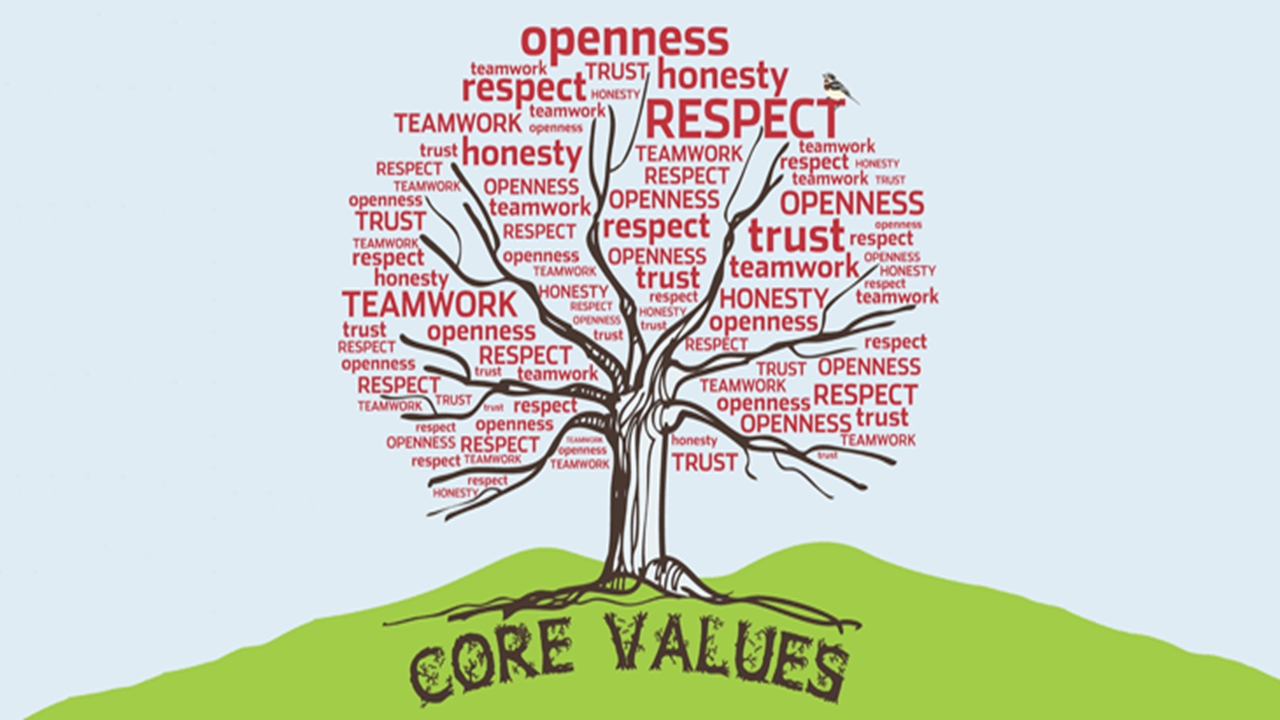
In the multinational organisation, people from different culture and background are working which helps in building new ideas and concepts. People in the similar workplace may have their own religion, culture, or various norm. The key criterion that brings them together is achieving the goals of the organisation. Culture is the values, beliefs, and the standard that reinforces the employees in the organisation to achieve the common goal. Similarly, organisational culture can be described as the culture which is unwritten that impact the behaviour of a group or individual which reinforces to operate activities in the organisation with the time period. It has been seen the stronger the culture of the organisation, the more profitable and healthy the organisation is (Mullins and Christy, 2016).

One of the successful companies that have embedded a strong culture is Google (Patel, 2017). According to Fitzgerald (2015), in some situations, organisations who have not managed the culture effectively may result in business failure, less collaboration within the employees in the organisation which causes the organisation to incur losses and some situation they may become insolvent. This blog would be discussing about a UK enterprise who have endured losses due to the poor culture. 

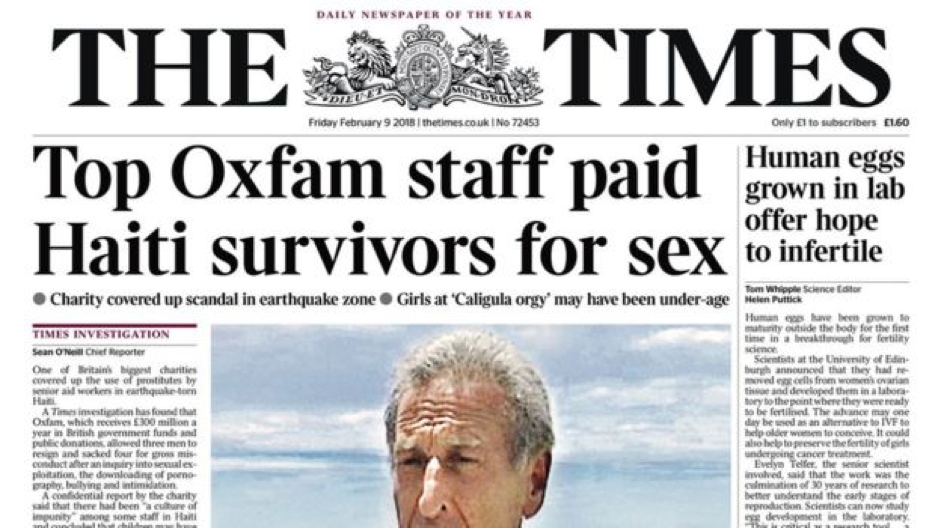
Oxfam was founded in the year 1942 as a charity organisation who are providing support to the people in situation of emergency for example natural calamities and are looking for justice for the people who need them. Additionally, they have also opened a shop where they are sharing a huge profit from the product that are being sold to the people at catastrophic situations (Bennett, 2018). 

In 2006, Oxfam was accused of a sexual scandal where rumours were spread in regards to a sexual harassment in Chad. It was heard that there were repeated sexual harassments in Haiti in the year 2010 and 2011. Furthermore, it was also heard that the director of the country was involved in the scandal (BBC News, 2018). Furthermore, Gayle (2018), have mentioned that the organisation was suffering from crisis and they have contacted various misconduct behaviour which is seen as the biggest criticism. After this current situation, the government and other non-government institution have attacked the company for misleading culture in the organisation (Rawlinson, 2018). 

After the crisis in the organisation has started, it was clearly visible that few of the cultures were implemented, however there may be some concealed behaviours which have resulted to misbehaving circumstance. This situation can be described by the iceberg theory where it mentioned that the obvious aspects for example financial resources, formal goals, regulation, and the rules are still noticeable in the working structure, however the concealed aspect for example personality and behaviour are not visible (Quinn, 2018). Therefore, it can be deduced that these characters are not developed properly and the organisation may lead to wrong pathways. Moreover, the country director was perceived as ineffective leader which has caused the organisation to be lead in an unproductive week. Therefore, to counteract this issues within the organisation, it is important for the organisation to build a change of plan which will alter the concealed attributes of the employees and at the same time regulate them to prevent such scenarios.

After comprehending and analysing the current condition of the organisation and about their former director, it had described apparently that volunteers and staff were working together on a specific mission and then they were shifted to a different job to other regions. These personalities can be designated as task culture which is one of the culture of organisation by handy. The task culture is defined as the culture that individuals from different backgrounds are working together to accomplish a specific task. If the task culture is embedded in the culture and aspect of the organisation, that it would result in successful accomplishment. Moreover, other aspects for example the issue and association that has taken place in the camp was not emphasised. Hence, if the organisation is able to concentrate their focus on other culture, then it may decrease the impacts of the scandal. 

From the Oxfam scenario, it is evident that the company was lacking suitable culture and leadership within the employees and their working locations. Therefore, if the organisation emphasise on the implementation of appropriate culture and leadership is embedded in the organisation, then the issues of scandal can be minimised and the brand can recover their image. 

References

BBC News (2018). Oxfam GB banned from Haiti after sex scandal. [online] BBC News. Available at: https://www.bbc.co.uk/news/uk-44474211 [Accessed 8 Jan. 2019].

CCL (2018). The Top 6 Leadership Challenges Around the World. [online] Center for Creative Leadership. Available at: https://www.ccl.org/articles/leading-effectively-articles/top-6-leadership-challenges/ [Accessed 8 Jan. 2019].

Fitzgerald, T. (2015) Can Change In Organizational Culture Really Be Managed?, 17(2), pp.5-15.

Gayle, D. (2018). Timeline: Oxfam sexual exploitation scandal in Haiti. [online] the Guardian. Available at: https://www.theguardian.com/world/2018/jun/15/timeline-oxfam-sexual-exploitation-scandal-in-haiti [Accessed 8 Jan. 2019].

Mullins, L. and Christy, G. (2016). Management and organisational behaviour. Harlow, England: Pearson.

Quinn, P. (2018). Applying Hemingway’s ‘Iceberg Theory’ to Native Advertising Creates an Impossible to Ignore End Result. [online] Adweek.com. Available at: https://www.adweek.com/creativity/applying-hemingways-iceberg-theory-to-native-advertising-creates-an-impossible-to-ignore-end-result/ [Accessed 8 Jan. 2019].

Rawlinson, K. (2018). Oxfam chief steps down after charity’s sexual abuse scandal. [online] the Guardian. Available at: https://www.theguardian.com/world/2018/may/16/oxfam-head-mark-goldring-steps-down-sexual-abuse-scandal [Accessed 8 Jan. 2019].